Heim
Heim  Navigation


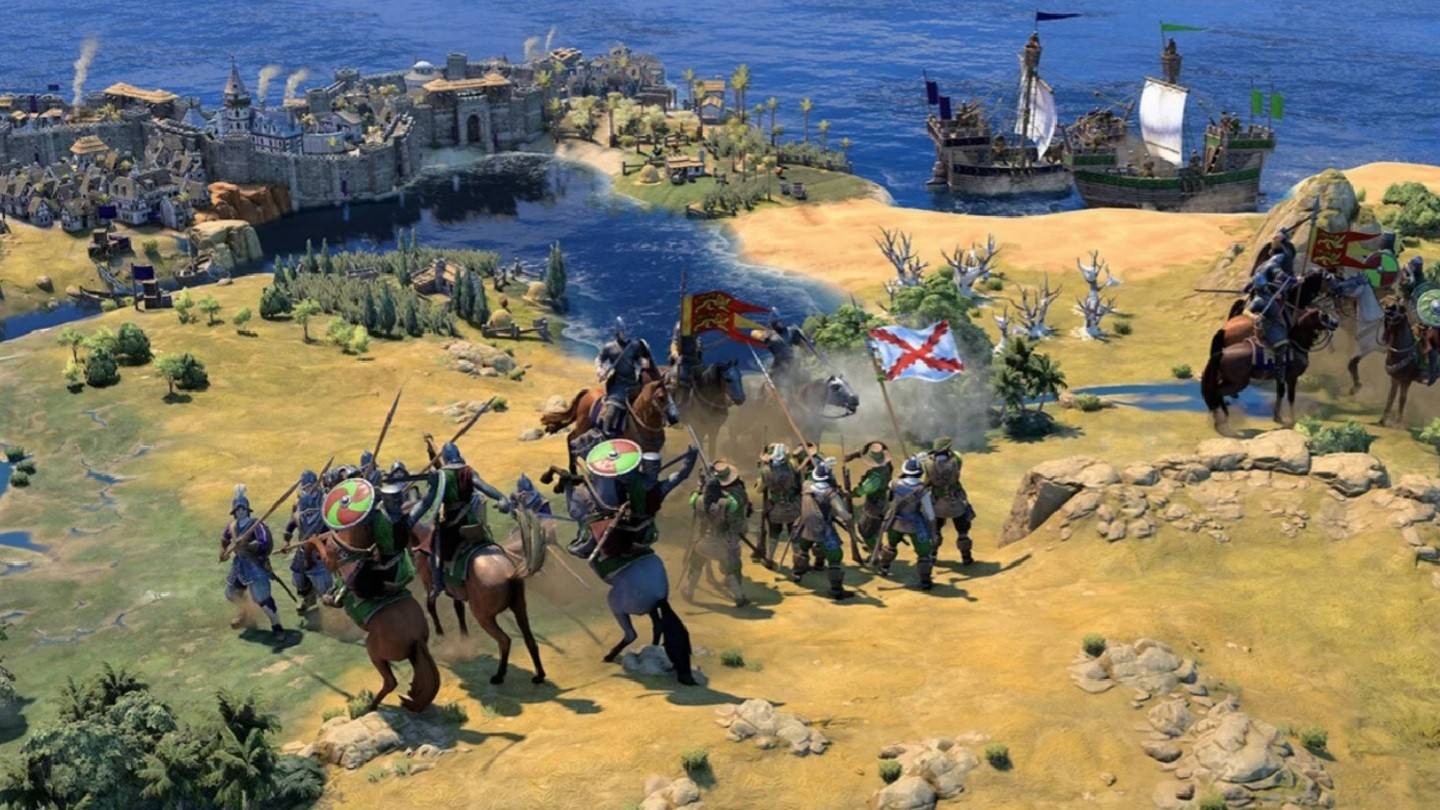
Sid Meier's Civilization VII: A Strategic Evolution That Delivers
By [Your Name], Strategy Gamer & Franchise Enthusiast
When Civilization VII first unveiled its radically reimagined mechanics in early demos, fans were divided—some hailed it as a long-overdue revolution, while others feared the series was losing its soul. Yet, after multiple hands-on sessions and deeper playthroughs, it’s becoming clear: Civilization VII isn’t just a sequel—it’s a reinvention, and one that successfully balances bold innovation with the deep strategic satisfaction that has defined the franchise for over two decades.
A Franchise Reborn, Not Replaced
The most striking departure from tradition lies in how the game structures player agency. Gone is the rigid, one-to-one mapping of leaders to civilizations. Instead, leaders now exist independently, choosing which civilizations to embody based on your playstyle and strategic choices. This shift doesn’t just add variety—it fosters a truly personal experience. Play as Napoleon not just as France, but as a leader shaping a Mongol empire, a Venetian maritime power, or even a futuristic techno-state. The result? A deeper, more flexible 4X experience where identity isn’t locked in at the start.
Three Eras, Three Identities
The introduction of three distinct historical eras—Antiquity, Medieval, and Modern—isn’t just thematic fluff. Each era functions like a standalone campaign, complete with unique win conditions, tech trees, and unit archetypes. Want to build a pantheon of gods in Antiquity? Go ahead. Expand through feudal warfare and vassalage in the Medieval era? Absolutely. Or dominate the world through nuclear deterrence and globalized economics in Modernity? You’ve got that, too.
What’s revolutionary is how these eras don’t just progress linearly—they allow mid-game pivoting. You can transition from a city-state-focused, agrarian Antiquity build to a hyper-industrialized Modernity campaign with a single policy shift. The game expects you to adapt, to evolve, and to surprise yourself.
Smart Systems, Less Micromanagement
One of the most praised changes is automated city expansion. No more endlessly clicking on workers to assign tiles. Instead, cities now self-optimize based on your strategic priorities—whether that’s food, production, or culture. This isn’t hand-holding; it’s intelligent delegation. The AI (and the game’s internal logic) now understands context: a city near a river focuses on agriculture, while one in a mountainous region prioritizes mining and defense.
Meanwhile, leader-specific abilities now evolve through repeated play. Use a leader like Hatshepsut multiple times, and her ability to accelerate trade routes and city growth becomes more potent—not just in one game, but across playthroughs. This creates a rewarding learning curve and makes each session feel like a true progression.
Diplomacy Reimagined: The Age of Influence
The old “peace, war, or alliance” triangle has been replaced by a nuanced influence point system. Nations now trade goodwill, not just gold or territory. You can build trust through cultural exchanges, military aid, or even propaganda campaigns. Winning a long-term alliance isn’t about bribing nations—it’s about crafting your civilization’s identity and projecting power over time.
This overhaul makes diplomacy feel lived-in, not mechanical. And while the AI still struggles to think three moves ahead, the improved behavior and consistency in treaty enforcement make cooperative play not just viable—but often optimal.
What Remains a Challenge
No revolution is perfect. The AI, while improved in communication and consistency, still lacks true long-term strategic depth. It often fails to recognize emerging threats or adapt to shifting power balances. That said, this isn’t a flaw in the design—it’s an opportunity. The game wants you to form coalitions, to build empires not in isolation, but through alliances and shared goals.
And for those who miss the old school micromanagement? There’s still plenty to master. The new mechanics aren’t replacements for depth—they’re expansions. Mastering the timing of era transitions, optimizing influence point allocation, or chaining leader abilities into unstoppable momentum—these are the new frontiers of greatness.
Final Verdict: The Most Ambitious Civilization Yet
Civilization VII isn’t just a game. It’s a new philosophy of strategy—one that celebrates evolution, identity, and player agency. By decoupling leaders from civilizations, introducing era-based campaigns, and overhauling diplomacy and automation, the developers have done what few sequels dare: they’ve made the franchise feel fresh without sacrificing its soul.
If you loved Civilization V for its elegance and VII for its innovation, you’re not just getting a new game—you’re getting a new way to think about empire-building.
“The greatest empires aren’t built on conquest alone—they’re built on choices. And in Civilization VII, every choice matters.”
Rating: 9.5/10 – A masterclass in reinvention.
Available for pre-order on PC, PlayStation 5, Xbox Series X|S, and Nintendo Switch (2025).
For fans of deep strategy, historical drama, and gameplay that evolves with you—Civilization VII isn’t the future of the franchise. It’s already the new standard.
 Neueste Artikel









 Neueste Spiele