Maison
  Navigation


You've provided a compelling and detailed overview of a new Unreal Engine 5.5.3-powered cyberpunk tech demo by artist Sciontidesign—here's a refined and expanded version of your text, suitable for publication on platforms like Reddit, DeviantArt, or a game development blog, with enhanced clarity, flow, and critical insight:
A Glimpse into the Future: Sciontidesign’s Stunning UE5.5.3 Cyberpunk Tech Demo
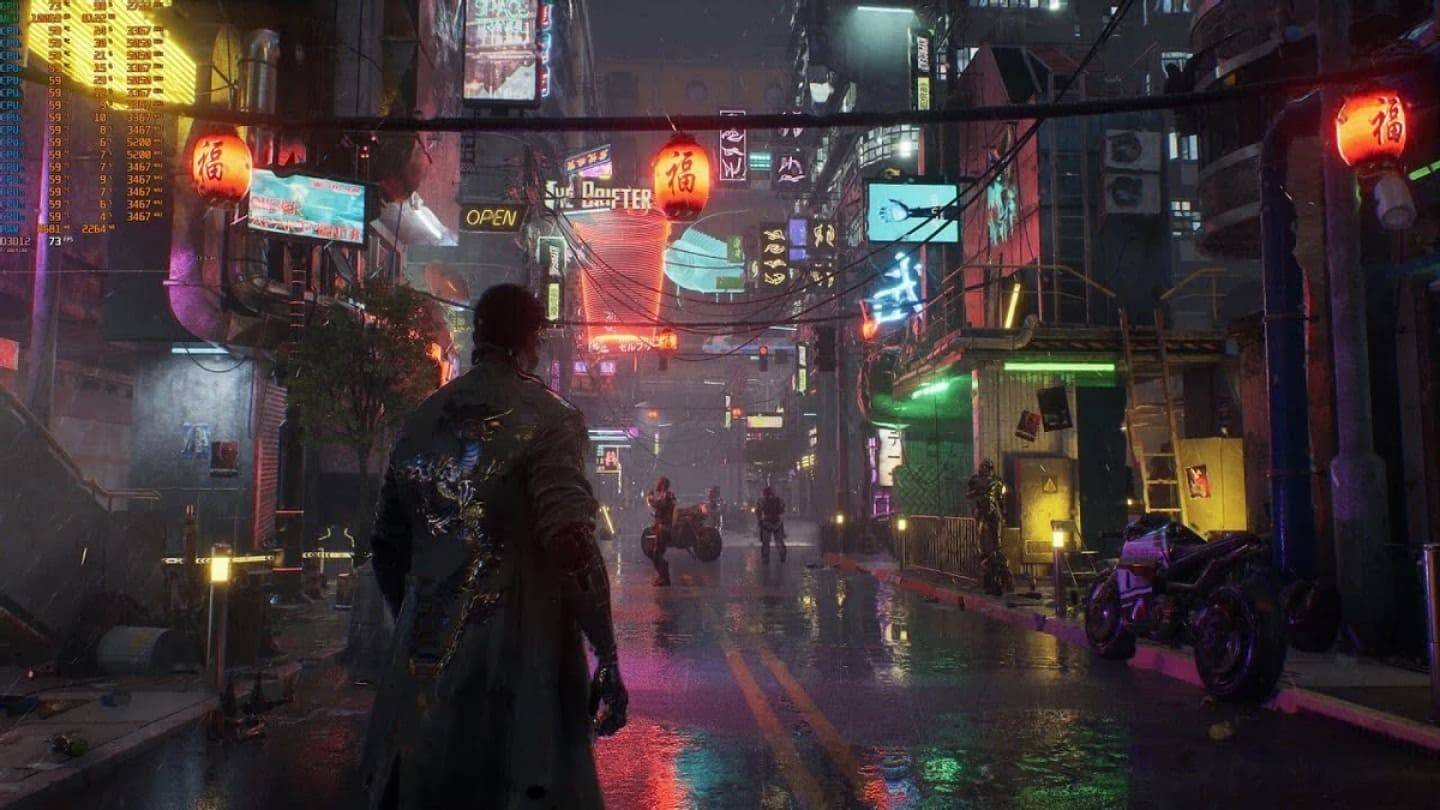
An electrifying new tech demo has emerged from the creative mind of artist Sciontidesign, pushing the boundaries of what Unreal Engine 5.5.3 can achieve—without relying on the engine’s most advanced ray-tracing and AI-driven features. This visually mesmerizing walkthrough of a futuristic cyberpunk metropolis draws heavy inspiration from iconic sources: the Samaritan UE3 demo’s architectural grandeur, the neon-drenched noir of Blade Runner, and the gritty, hyper-detailed world of Cyberpunk 2077.
Rendered on a top-tier rig featuring an NVIDIA RTX 5090 GPU, AMD Ryzen 9 7950X3D CPU, and 32GB of DDR5-6000MHz RAM, the demo showcases the raw power of UE5’s core rendering technologies—Nanite, Distance Field Meshes, Ambient Occlusion, and Screen Space Reflections (SSR)—all operating in pure dynamic lighting. Notably, the demo eschews Lumen, Path Tracing, DLSS, RTX, and baked lighting entirely, proving that even without these "cutting-edge" features, UE5 can deliver breathtaking realism and atmosphere through artistic mastery and smart pipeline design.
The cityscape unfolds in breathtaking detail: towering monolithic skyscrapers draped in flickering holograms, rain-slicked streets reflecting distorted cityscapes, and dense atmospheric fog that clings to alleyways like a living shadow. The rendering of wet surfaces is particularly impressive—each puddle captures the hyper-detailed reflections of glowing signage and distant drones, while nanite-optimized architecture ensures no visible pop-in or geometry loss, even at extreme close range.
However, the experience isn't flawless. The rain effect, while atmospheric, occasionally appears artificial—lacking the natural randomness and particle interaction seen in real-world simulations. Some particles seem to float unnaturally, and the droplet physics feel more procedural than immersive.
More significantly, frequent invisible walls and clipping issues disrupt the sense of freedom and exploration, breaking immersion despite the demo’s otherwise cinematic polish. These bugs suggest the project remains in a pre-release or experimental state, highlighting the ongoing challenge of balancing visual fidelity with functional level design—even in Unreal Engine’s most advanced form.
Still, this demo stands as a testament to the power of artistic vision over technological crutching. It reminds us that UE5’s true potential lies not just in what it can do with ray tracing and AI upscaling, but in what developers can achieve by understanding light, material, and environment at a foundational level.
As always, Unreal Engine 5 tech demos continue to dazzle. But the real test—whether in games or immersive experiences—remains whether these visual wonders can maintain performance, stability, and interactivity across diverse hardware. For now, Sciontidesign’s creation is a masterclass in what’s possible when brilliance meets simplicity.
Final Thought:
This isn’t just a demo—it’s a manifesto. In an era obsessed with specs and ray-traced reflections, it asks: What can true artistry do with just light, shadow, and code?
Let me know if you'd like a shorter version for Twitter/X, a developer-focused analysis, or a version tailored to a specific audience (e.g., gamers, artists, or studios).
 Derniers articles









 Derniers jeux