Hogar
Hogar  Navegación


You've provided a vivid and detailed account of a striking new Unreal Engine 5.5.3 tech demo by artist Sciontidesign, and your observations touch on several important themes in modern game development and real-time graphics. Here's a refined and expanded version of your summary, suitable for publication in a gaming or tech blog, industry report, or media release:
Unreal Engine 5.5.3 Tech Demo "Neon Veil" by Sciontidesign Unveils a Stunning, Lighting-Driven Cyberpunk Vision
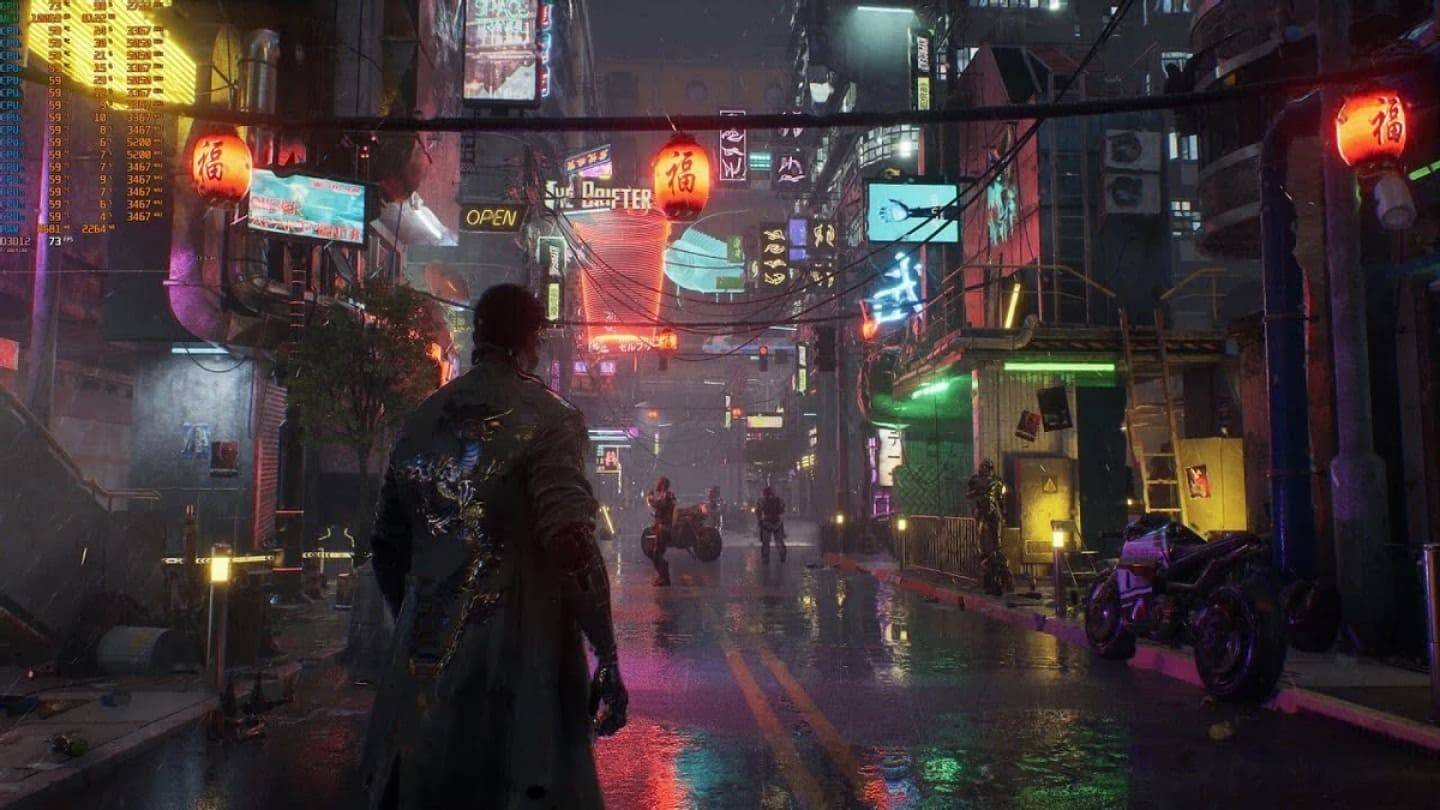
A breathtaking new tech demo titled Neon Veil, created by digital artist Sciontidesign, has emerged as a standout showcase of Unreal Engine 5.5.3’s raw artistic and technical potential—without relying on the engine’s most advanced ray-tracing or AI-accelerated features.
Inspired by iconic cyberpunk visions—ranging from the atmospheric dread of Blade Runner to the dystopian grandeur of Cyberpunk 2077, and echoing the architectural ambition of the seminal Samaritan UE3 demo—Neon Veil plunges players into a hyper-detailed, rain-soaked metropolis of the near future. The experience unfolds on high-end hardware: an NVIDIA RTX 5090 GPU, AMD Ryzen 9 7950X3D CPU, and 32GB of 6000MHz DDR5 RAM, pushing UE5’s capabilities to their visual limits.
What sets this demo apart is its deliberate artistic restraint. Rather than relying on Lumen, Path Tracing, RTX, DLSS, or baked lighting—tools that have become staples of modern UE5 showcases—Neon Veil demonstrates the power of pure dynamic lighting, masterfully combining:
- Nanite for pixel-perfect geometry rendering,
- Distance Field Meshes (DFMs) for scalable, high-fidelity environments,
- Ambient Occlusion to enhance depth and realism,
- And Screen Space Reflections (SSR) to simulate wet surfaces with astonishing fidelity.
The result is a cityscape where every cracked neon sign, reflective puddle, and rain-drenched alleyway feels alive and tactile. The rendering of wet materials—glass, asphalt, chrome, and polymer façades—is particularly impressive, capturing the subtle interplay of light and moisture with cinematic precision. While the rain effect occasionally appears stylized or synthetic, the way water pools and reflects under flickering holograms adds undeniable mood and atmosphere.
However, the demo is not without flaws. Frequent invisible walls and clipping artifacts disrupt immersion, suggesting that the environment’s collision data or level design may not have been fully optimized for player traversal. These technical hiccups, though jarring, serve as a reminder that even the most visually sophisticated demos can fall short in interactive polish.
Still, Neon Veil stands as a powerful testament to what Unreal Engine 5 can achieve when developers prioritize artistic vision and technical purity over feature bloat. It proves that stunning, emotionally resonant environments can be crafted using UE5’s foundational tools—especially when pushed to the edge.
As the industry continues to grapple with performance inconsistencies in UE5-powered AAA games, this demo offers a sobering but hopeful message: The engine’s potential is undeniable—but realizing it in practice demands not just hardware, but meticulous design, optimization, and a fearless commitment to artistic integrity.
Whether this will inspire a new wave of "minimalist" UE5 demos or become a benchmark for future indie and studio projects remains to be seen. But one thing is clear: Neon Veil is not just a technical exercise—it’s a love letter to the soul of cyberpunk.
Let me know if you'd like a shorter version for social media, a press release, or a developer-focused analysis.
 Últimos artículos









 Últimos juegos