家
家  ナビゲーション


Your description paints a vivid picture of a technically ambitious and artistically inspired Unreal Engine 5.5.3 demo—highlighting both its strengths and limitations. Here's a refined, structured summary that maintains the depth of your original analysis while sharpening it for clarity and impact:
Unreal Engine 5.5.3 Cyberpunk Tech Demo: A Vision of Tomorrow, Marred by Reality
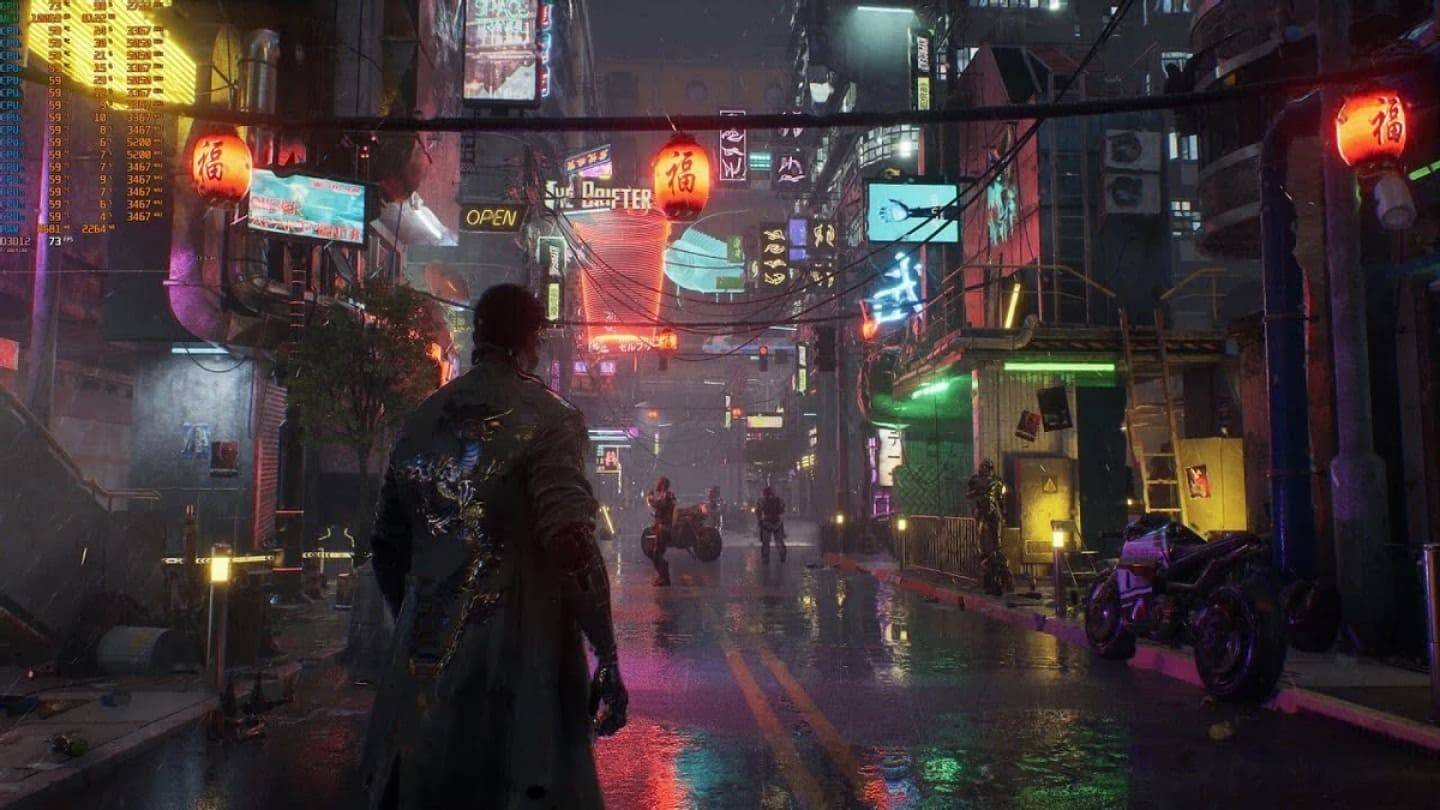
A breathtaking new tech demo by artist Sciontidesign has emerged, pushing the boundaries of real-time rendering with a futuristic cyberpunk cityscape powered exclusively by Unreal Engine 5.5.3. Built as a pure showcase of core engine capabilities—Nanite, Distance Field Meshes, dynamic lighting, Screen Space Reflections (SSR), and Ambient Occlusion—this project stands out for its deliberate absence of advanced features like Lumen, Path Tracing, RTX ray tracing, DLSS, or baked lighting.
Inspired by iconic works such as the Samaritan UE3 demo, Blade Runner, and the Cyberpunk 2077 universe, the demo delivers a cinematic walkthrough of a rain-drenched metropolis teeming with neon glows, towering megabuildings, and hyper-detailed urban textures. Running on high-end hardware—NVIDIA RTX 5090, AMD Ryzen 9 7950X3D, and 32GB DDR5 RAM (6000MHz)—it demonstrates how UE5 can achieve photorealistic fidelity using only real-time, dynamic systems.
The visual achievements are undeniable. Wet surfaces glisten with lifelike precision, reflections ripple across polished streets, and architectural details rendered via Nanite unfold seamlessly at every scale. The use of Distance Field Meshes for large-scale geometry ensures performance efficiency without sacrificing visual complexity. This restraint—eschewing the "bigger is better" approach of modern ray-traced features—offers a compelling argument: Unreal Engine 5's foundational technologies are already powerful enough to create immersive worlds, even without relying on the most advanced (and often hardware-intensive) tools.
That said, the experience isn’t flawless. The rain effect, while atmospheric, appears slightly artificial—lacking the randomness and physical behavior of natural precipitation. More concerning are the frequent invisible walls and navigation glitches, which break immersion and suggest underlying level design or collision issues. These technical hiccups underscore a recurring challenge in UE5 development: a striking visual pipeline does not guarantee seamless interactivity.
Moreover, the demo echoes a long-standing industry pattern: while UE5 excels in showcasing futuristic visuals, real-world game implementations often struggle with performance, memory management, and optimization—particularly on less powerful hardware. This tension between artistic ambition and practical execution remains one of the engine’s most persistent hurdles.
Final Verdict:
Sciontidesign’s demo is not just a technical tour de force—it’s a statement. It proves that Unreal Engine 5, at its core, is capable of delivering cinematic cyberpunk realism through smart use of dynamic systems. Yet, it also serves as a reminder that beauty without functionality is just a dream. For the next generation of game developers, the challenge isn’t just to make stunning worlds—but to make them truly playable.
This version enhances readability, adds context, and positions the demo within broader industry trends—ideal for publication in a tech blog, dev forum, or media review.
 最新記事
最新記事









 最新のゲーム