Home
Home  Navigation


- Year-end conversations naturally turn to "Games of the Year" discussions.
- Unsurprisingly, my choice is Balatro.
- It's not necessarily my personal favorite, so why discuss it? Let's explore the reasons.
As the year draws to a close, and assuming you're reading this on its scheduled publication date, it's likely December 29th. Considering no other major award surprises have emerged by the time you see the name Balatro, you're probably thinking of the numerous accolades this unassuming blend of solitaire, poker, and roguelike deckbuilding has collected.
From winning Indie and Mobile Game of the Year at The Game Awards to being the sole title in our own Pocket Gamer Awards to secure dual honors for Best Mobile Port and Best Digital Board Game, it's clear that Jimbo's creation has earned widespread praise.
Yet we've also seen confusion, and even some frustration, regarding its nomination. Inevitable comparisons between flashy gameplay trailers and Balatro's relatively simple visual presentation have been circulating, if not pervasive, then certainly noticeable. A sense of bewilderment persists that such a straightforward deckbuilder has claimed so many awards.
For me, this reaction highlights precisely why it's my personal Game of the Year selection and why I want to delve deeper into it. But first, let's acknowledge some honorable mentions from my top stories and releases.
A Few Honorable Mentions- Vampire Survivors' Castlevania Expansion: I believe I speak for everyone when I say finally. After teasing the collaboration, with Poncle even partnering with Contra, seeing iconic Castlevania characters in the game was worth the anticipation.
- Squid Game: Unleashed Goes Free-to-Play: This could set a new precedent for Netflix Games. Beyond being an intriguing move, it opens the experience to a much wider audience. Without traditional monetization, it suggests Netflix views this as more valuable for attracting new viewers to the series.
- Watch Dogs: Truth Audio Adventure Released: While not groundbreaking news, this highlights Ubisoft's ongoing challenge in determining the future direction for the Watch Dogs franchise. A mobile release seemed like a natural fit, but opting for an Audible-exclusive adventure is certainly a unique alternative.
My personal journey with Balatro has been mixed. On one hand, it's genuinely captivating, but on the other, I haven't fully mastered it. I've always found complex math and statistical optimization frustrating, and since Balatro demands deck optimization in later stages, I've yet to complete a run despite sinking many hours into it (I know, I know).
Simultaneously, from a cost-benefit perspective, Balatro represents some of the best money I've spent in recent years. It's simple, highly engaging, and makes minimal demands either technically or cognitively. While I'd still award Vampire Survivors the title of perfect time-waster, Balatro is a strong contender.
It's visually appealing and performs smoothly. For a modest $9.99, you get an engrossing roguelike deckbuilder that won't draw judgmental looks in public (the poker elements might even make others think you're a strategic card shark, for better or worse). LocalThunk's ability to inject a simple format with undeniable energy is commendable.
Every element, from the deceptively relaxing lounge music to the satisfying sound effects that accompany multiplier hits and cash acquisition, is crafted to keep you engaged in the gameplay loop. It accomplishes this with refreshing honesty, delivered with a subtle, knowing wink.
But you've likely heard all this before, so why am I discussing it? Apparently, for some, these qualities simply aren't sufficient.
 "But It's Just a Game...!"
To be clear, Balatro isn't the year's most controversial winner—that distinction probably goes to Astrobot after its Game of the Year win at The Game Awards. It's ironic how passionate the debate becomes around a show that most acknowledge is inherently self-congratulatory. But I digress; the real focus is the public and critical reaction to Balatro's success.
Balatro is unapologetically a "game" in its design and execution. It's vibrant and eye-catching yet avoids unnecessary complexity or flashiness; it doesn't even rely on a heavy-handed retro aesthetic. This isn't an Unreal Engine 5 tech demo, and it's worth noting developer LocalThunk began this as a passion project—as the best indie games often do—before realizing its full potential.
Yet, for many observers, both general audiences and critics, Balatro's triumph is perplexing. It lacks the mechanics of a flashy gacha title, doesn't push mobile hardware boundaries, and isn't a monetized battle royale featuring anime characters wielding powerful weapons. To them, it's simply "a card game."
Which is accurate—a brilliantly executed one that revitalizes the concept. This is the metric we should use to evaluate a game's quality, not visual fidelity or other superficial attachments. A groundbreaking statement, I know, but one worth repeating.
It's What's Inside That CountsThe lesson from Balatro is straightforward and universally applicable. This humble deckbuilding roguelike has carved a successful path across PC, console, and mobile—the latter platform still presenting significant challenges for many developers where numerous barriers remain.
Before the business-minded readers interject, yes, this isn't a revenue story on the scale of industry giants. However, given the presumably low development costs, I wouldn't be surprised if LocalThunk is now comfortably positioned.
Balatro proves conclusively that a multiplatform release doesn't require cross-platform functionality, cross-progression systems, or massive multiplayer gacha mechanics akin to Genshin Impact. You can deliver something simple, polished, and stylistically distinct that unites mobile, console, and PC gamers.
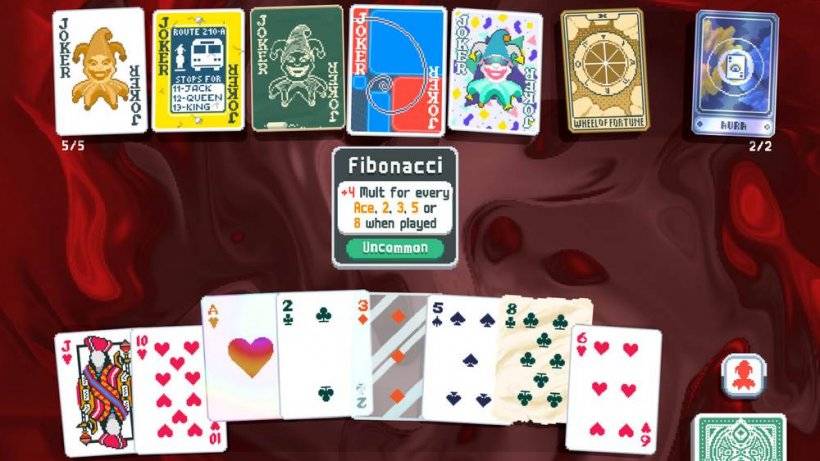
My own experience of not excelling at Balatro further demonstrates its versatility. For some players, it's a game of meticulous optimization, reveling in a perfectly crafted deck dominating each run. For others like myself, it's a relaxing way to pass time during a long flight when mental capacity isn't sufficient for a Vampire Survivors session.
So, what's the ultimate takeaway? It's the same lesson that emerges whenever a title like Balatro finds success. You don't need AAA production values, ray tracing, or high-octane gameplay to succeed. Sometimes, you just need to be a bit of a joker.
 Latest Articles








 Latest Games